
New Report Outlines Path to Sustainable Medicaid in New Jersey
Three reforms could stabilize costs while protecting care for 2 million residents.
FOR IMMEDIATE RELEASE
Contact: Audrey Lane, GSI President
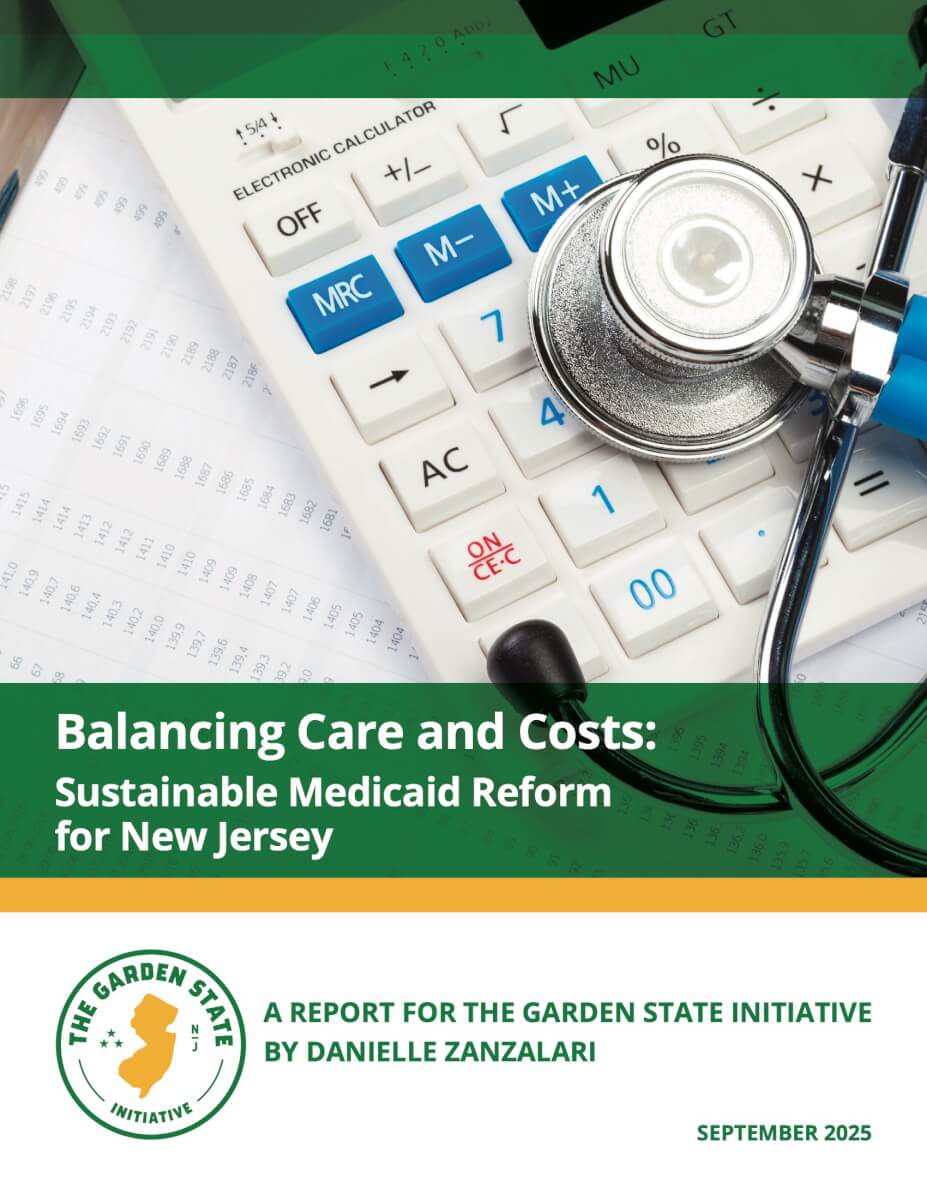
Morristown, NJ – A new report from Garden State Initiative finds that New Jersey’s Medicaid program, NJ FamilyCare, is on an unsustainable fiscal trajectory without structural reform. Covering nearly 2 million residents, about one in five New Jerseyans, Medicaid now represents one of the state’s largest and fastest-growing budget items, with combined federal and state spending projected to reach $22.8 billion in FY2026, a 16% year-over-year increase.
The report documents how rising enrollment, healthcare inflation, and declining federal support are placing unprecedented pressure on state finances. It outlines three achievable reforms to ensure the program’s long-term sustainability:
- Cost containment – strengthen eligibility oversight, improve managed care accountability, reform prescription drug purchasing, and expand value-based payment models.
- Long-term care reform – rebalance spending toward more affordable home and community-based care that better reflects patient preferences.
- Workforce investment – expand New Jersey’s nursing pipeline and retention strategies to address severe staffing shortages, particularly in long-term care.
“New Jersey’s Medicaid program will cost $22.8 billion in FY2026, up 16% from last year,” GSI President Audrey Lane explained. “Coupled with the state’s structural budget deficit, these rising expenditures make real reforms essential to protect both coverage and core state services.”
The report notes that the expiration of enhanced federal matching rates and looming federal Medicaid reductions could leave New Jersey with an average $1.23 billion annual funding gap if coverage is maintained at current levels. At the same time, New Jersey continues to devote 79% of long-term care spending to nursing homes, despite significantly lower costs and higher patient satisfaction associated with home- and community-based alternatives.
“New Jersey cannot keep patching Medicaid with temporary fixes. Without reforms, costs will overwhelm the budget and force cuts elsewhere,” said Danielle Zanzalari, GSI Contributor and Author. “The solutions are not complicated: contain costs by addressing eligibility and holding MCOs accountable, shift care toward in-home and community-based services, and invest in the nurse workforce.”