
A new report released by the Garden State Initiative, finds that while New Jersey spends more on K-12 education than nearly every other state, its school funding formula is producing inequities for students and unpredictable burdens for taxpayers.
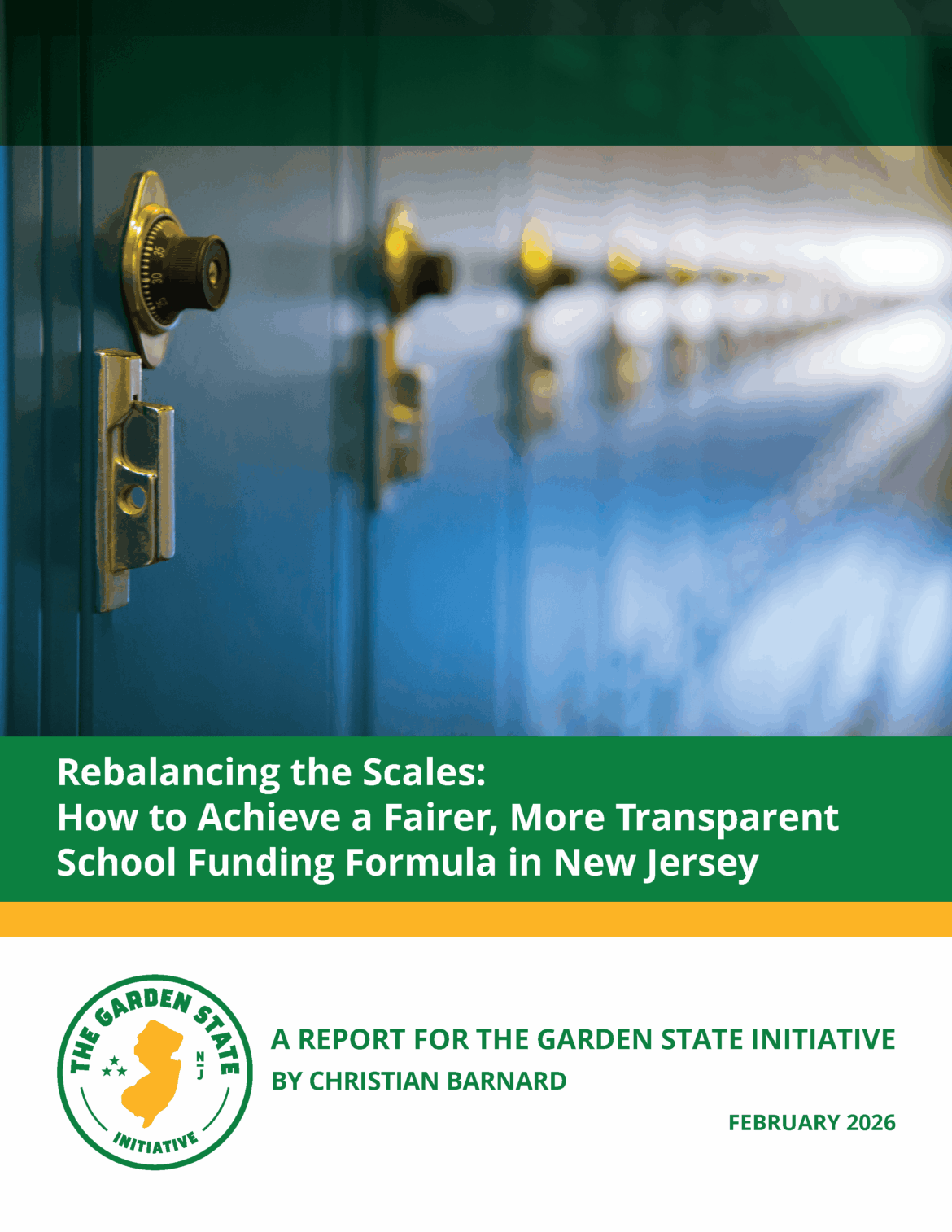
Authored by Christian Barnard, the report Rebalancing the Scales: How to Achieve a Fairer, More Transparent School Funding Formula in New Jersey, reveals that New Jersey ranks third nationally in per-pupil funding at $26,990 per student, while also maintaining the highest property taxes per capita in the country. Yet despite this historic level of investment, the state’s School Funding Reform Act (SFRA) continues to generate funding disparities between districts serving students with similar needs.
For example, three high-poverty districts-Jersey City, North Bergen, and Newark-receive dramatically different per-student funding levels despite comparable poverty rates. At the same time, 192 districts collectively receive $396 million more than the formula dictates, while 284 others receive $383 million less due to caps and adjustments layered onto the system.
“New Jersey taxpayers face the highest property tax burden in the country and some of the highest overall state spending levels. Yet we already spend more per pupil on K-12 education than almost any other state,” said Audrey Lane, President of GSI. “Reforming the funding formula will create a transparent, predictable system that protects taxpayers and ensures students get the support they need. Education funding should work fairly for every community.”
The report finds that these imbalances stem from three core problems:
- Lack of transparency in how formula cost assumptions and state aid decisions are made
- Volatile state aid allocations that do not consistently reflect enrollment changes
- Unrealistic Local Fair Share (LFS) expectations, which often exceed the state’s 2% property tax cap and disproportionately burden middle-income districts
The report notes just over 50% of all state aid is concentrated in just 22 of New Jersey’s 590 school districts, creating uneven tax effort expectations across communities.
The report outlines five key reforms lawmakers can implement:
- Stabilize and slow the growth of formula cost demands by re-evaluating and auditing outdated cost assumptions built into the SFRA
- Simplify and stabilize Local Fair Share calculations to align with the 2% property tax cap and reduce volatility
- Preserve the 2% property tax cap to protect homeowners from unsustainable increases
- Limit the use of caps on state aid increases and decreases, ensuring aid better reflects actual enrollment
- Improve transparency by providing districts with at least 60 days notice of state aid decisions, along with clear explanations of formula calculations and tax implications
“For policymakers, the message is clear: more spending alone is not the solution. Smarter, more transparent funding reform is,” added Lane. “We’re hopeful Governor Sherrill and the legislature can work in a bipartisan way to bring transparency and reform to benefit taxpayers and students alike.”