- November’s 5.4% unemployment rate second highest in the nation.
- October-November 5,300 job loss eliminated about half of September’s increase.
- One bit of good news: New Jersey’s job count is likely understated.
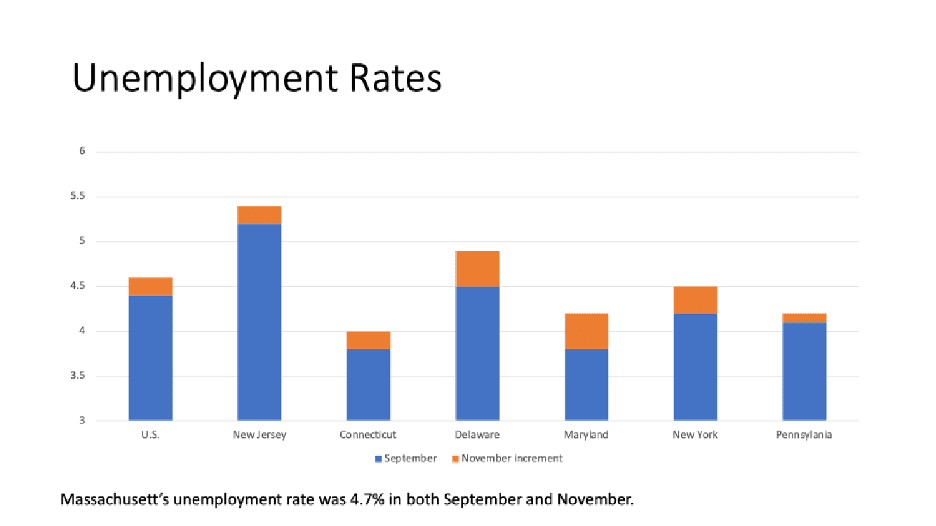
The combined October-November labor market report for New Jersey painted a pretty sober portrait. November’s unemployment rate was 5.4%, up from September’s 5.2% (due to the federal government shutdown, no figure could be computed for October). November’s rate was the second-highest for any state, trailing only California (DC was also higher). A small solace is that the estimates of the state’s labor force and numbers of residents at work in November were a bit above the numbers for September. Other states in the region—such as Connecticut, Delaware, New York, Pennsylvania, and Maryland, also saw increases in unemployment from September to November, but their rates are substantially lower than ours.
The job report was also discouraging, with declines of 3,600 in October and 1,700 in November. The cumulative drop of 5,300 over the two months offsets more than half of September’s 10,300. Over the 12 months ending in November, the number of jobs in New Jersey is estimated to have risen a meager 20,600, or less than ½ of one percent.
Looking at November alone, the pattern of job changes by sector was mixed. Construction, Professional and Business Services, and Leisure and Hospitality saw large declines—a total of 8,400 across the three. In contrast, Trade, Transportation, and Utilities, and Education and Health Services, saw good increases, totaling 6,700. There are large, erratic, seasonal changes in a number of these sectors as colder weather sets in and the holidays approach, which may have influenced some of the seasonally adjusted counts (this year’s seasonal adjustment factors would not have necessarily been on the mark).
One brighter bit of information has come in regarding the state’s job numbers. The annual revision for the job count, due out in March, depends upon the comprehensive information on the number of jobs covered by unemployment insurance last June. Those recently released figures suggest that the number of jobs in the state reported monthly have been undercounted—perhaps by 20,000 or more. This is in pretty marked contrast to the likely marked downward revision in the national job count.